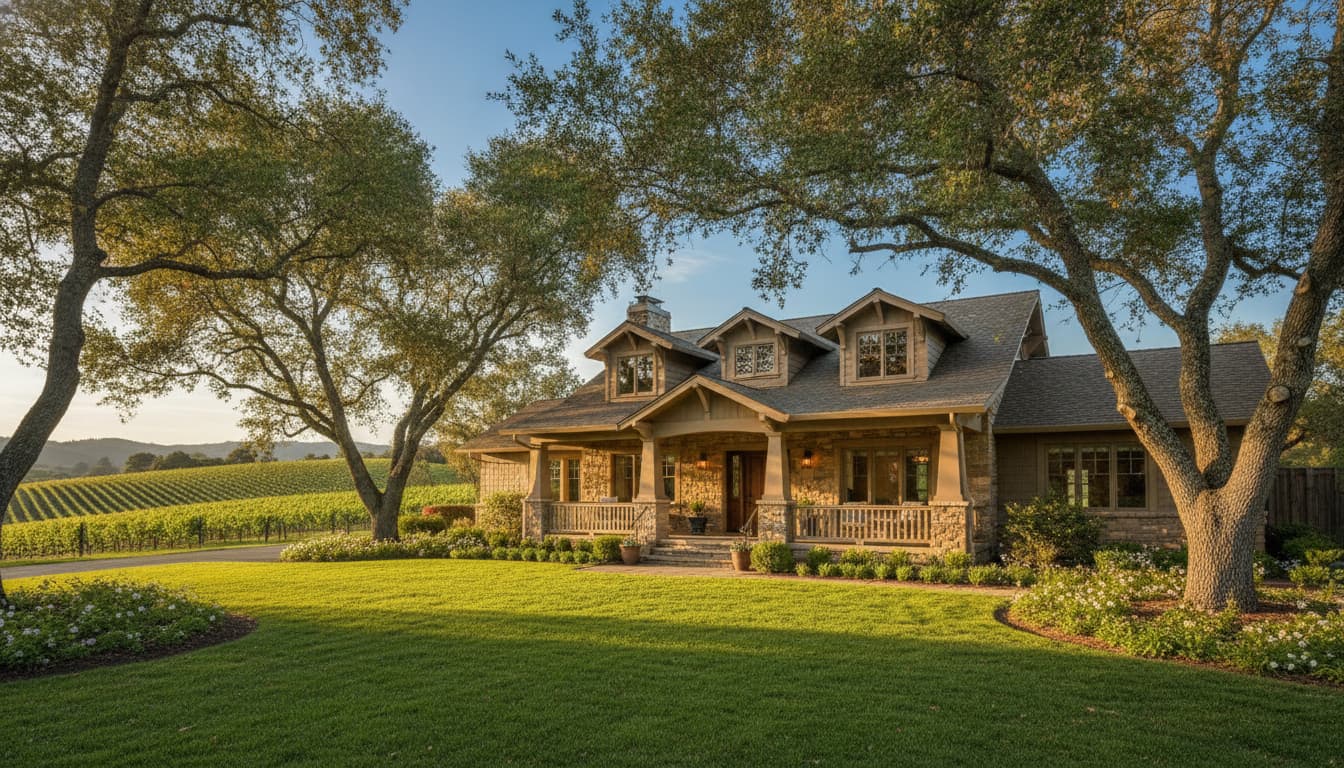
Why I Wanted to Get These Answers on the Record
I was glad to be interviewed about VA construction loan financing for an article, and the questions I was asked were the same ones I hear from veterans all the time. So I've pulled my answers together here in a clean Q&A format, because there's a lot of confusion out there and very little good information.
The truth is, there aren't many mortgage professionals doing these loans. My competition in this space is sparse, and the main reason is simple: most lenders don't understand the VA one-time close construction-to-permanent program well enough to offer it. That gap is exactly why so many veterans never hear about one of the best financing tools available to them.
What's the Difference Between a VA Loan and a VA Construction Loan?
A traditional, non-construction VA loan is used to purchase or refinance an existing structure, a home that's already built. The VA construction loan is different. The VA one-time close construction-to-permanent program wraps interim construction financing, the lot purchase (if you need one), and the permanent loan all into a single loan with a single closing.
This is a relatively new program, so the volume numbers are still a little unknown. But here's what we do know about how underused VA financing is in general. According to the 2010 National Veterans Survey, among respondents who used a loan other than VA, 33.6% didn't even know about the VA loan program at all. 62.8% of older veterans said their lender never discussed the VA loan option with them, and for 25.8% of younger veterans, the lender did not discuss the VA loan either. On top of that, 8.1% said their Realtor or lender actively discouraged the use of the VA loan.
That's a real problem. I have to assume very few veterans are aware of this fantastic resource, and the construction version is even less known.
Why Are These Construction Loans So Valuable for Veterans?
In a lot of markets right now, it's nearly impossible for a qualifying veteran to buy a home. Inventory is low and the competition among buyers is fierce. The VA construction loan changes the math entirely: it lets a veteran purchase a bare lot and cover the full cost to construct the home, all in one loan.
Consider this. There aren't any 100% loan-to-value lot loans on the market, and the competition for raw land is practically nonexistent compared to finished homes. This isn't technically a lot loan, but it gives you far more flexibility than the traditional purchase route. For a first-time home buyer who's been priced out or shut out by the lack of existing homes for sale, it can be a great, affordable path to ownership.
Who Qualifies for a VA Construction Loan?
Basically, if you qualify for a standard non-construction VA loan, you qualify for the VA one-time close construction-to-permanent loan. That means any eligible veteran, active-duty service member, or eligible surviving spouse can use the program.
There are many variations in the detailed requirements, so I won't try to list every scenario here. The best move is to talk through your specific situation so we can confirm your eligibility and entitlement before you fall in love with a piece of land.
Credit, DTI, and Property Requirements
Here are the core qualifying guidelines I get asked about most often:
- A 620 minimum FICO score is required.
- The permanent loan can be a 15-year or 30-year fixed.
- Eligible properties are 1-unit homes, manufactured homes (multiwide only), and modular homes. The property must be your primary residence.
- There is no published maximum debt-to-income ratio. Maximum DTI is calculated by the automated underwriting system, but the VA residual income requirement must still be met, just as it is on every VA loan.
What Is the Certificate of Eligibility (COE)?
The Certificate of Eligibility, or COE, shows how much entitlement the veteran has available. Entitlement is the dollar amount of guaranty, or insurance, that the VA provides to the lender in the event of a default.
Based on the county the home is located in, the VA will guarantee a maximum percentage of the loan amount using this entitlement. One important note: if the veteran already has an existing VA loan, that will reduce the amount of entitlement available for further use. We always check your COE early so there are no surprises.
Builder Requirements for a VA Construction Loan
The VA doesn't let just anyone build the home. The builder has to register with the VA, be approved by them, and carry a VA builder ID number.
The VA also enforces minimum property requirements (MPRs) that the finished home must meet. There's a fair amount of detail there, and it's something we walk through together once we know your builder and your plans.
The Steps to Get a VA Construction Loan
Here's the path from start to finish so you know what to expect:
- Pre-qualification. As with any loan, we first confirm you'll qualify for the loan you're after. This includes a credit check, copies of income documents, and asset documentation if it's needed.
- Builder/retailer registration. We make sure your builder or retailer is reputable, VA-approved, and has a track record of finishing construction projects on time and on budget.
- Deal calculation. We figure out the total loan amount, including closing costs due, any seller or builder concessions, interim interest, and the rest of the figures that make up the project.
- Underwriting (credit and construction). We submit the loan to underwriting, where they review income, credit, and assets, plus the construction cost estimates and the list of materials. They confirm the builder is VA-approved and that the property conforms to local building codes.
How Is It Different From a Conventional Construction Loan?
Traditional construction loans are a tougher deal for the borrower. They typically require a large down payment, carry adjustable rates, and force the borrower to requalify after construction in order to convert the loan to permanent financing. That's a lot of risk to carry through a months-long build.
The VA one-time close loan allows up to 100% financing of the entire project, including the cost of the lot, subject to the maximum county loan limits. The loan amount can exceed the county loan limit, but in that case the veteran would be required to contribute at least 25% of any amount above the limit.
There are two more advantages worth highlighting: even the closing costs can be worked into the loan amount, and the interest rate is locked at closing, not 12 months from now when the home is finally completed. With a conventional construction loan, your rate is exposed to whatever the market does during the build.
The Pros of a VA One-Time Close Construction Loan
This is where the program really shines for veterans:
- No requalifying after construction. Everything is done up front before the purchase closes, so the borrower doesn't have to worry if their situation changes during the build. There are no new appraisals, no new credit reports, no requalification of income, and best of all, no additional fees for it.
- No payments during construction. There are no loan payments due while the home is being built, so the veteran isn't carrying a mortgage payment and a rent payment at the same time.
- The rate is locked before closing and construction for the life of the loan.
- The financing is 100% in place before construction even begins.
The Cons and Limitations to Know
I always want clients to go in with their eyes open, so here are the real constraints:
- No 'self-help.' The borrower cannot be responsible for, or personally perform, any aspect of the construction or site improvements. You also can't be responsible for hiring your own sub-contractors to do that work.
- Limited home styles. You cannot build a unique style of home. That rules out log cabins, multi-unit buildings, metal homes, tiny homes, and similar non-standard construction.
- The VA loan amount is limited to the county loan limit (with the 25% contribution rule kicking in above that limit).
- Change orders may not be allowed with some lenders, so plans need to be solid before you break ground.