Home › Loan options › Investment Property Loans
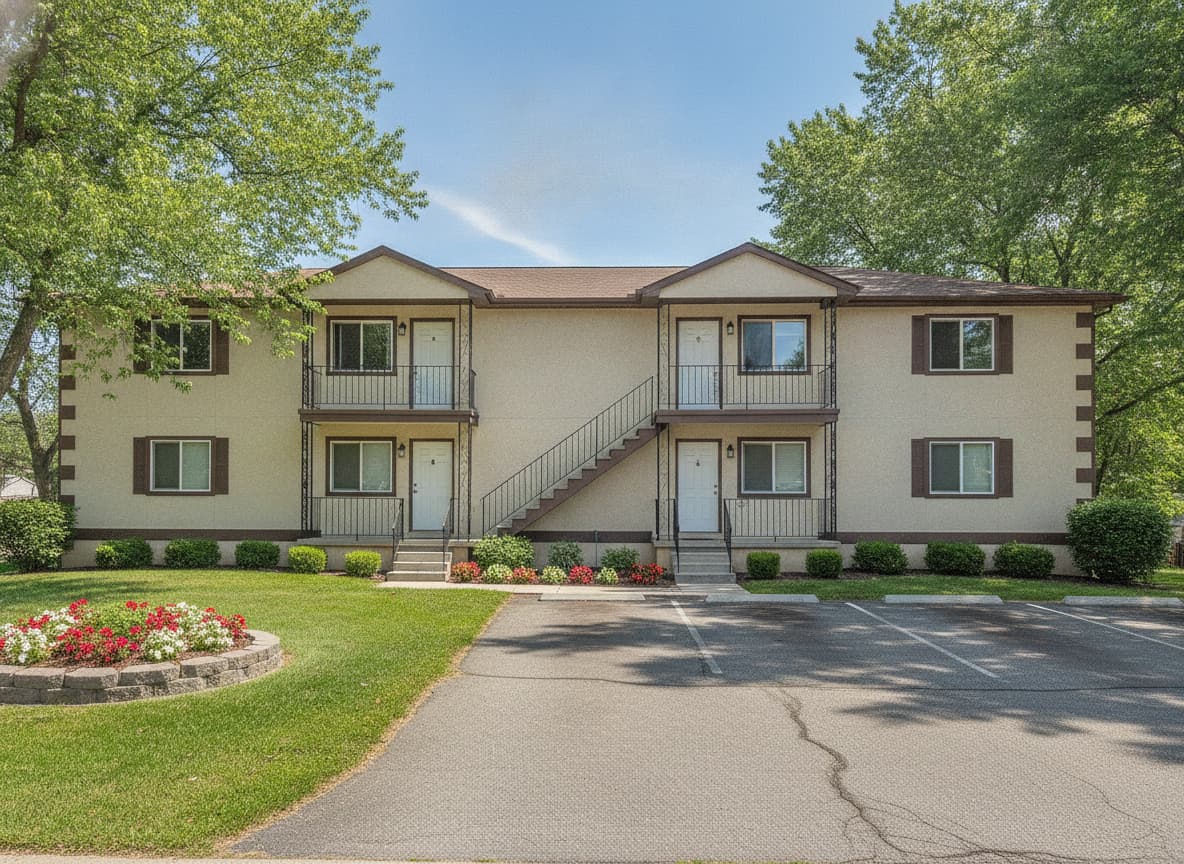 Non-owner-occupied · 1-4 units · California
Financing for the rentals that build your portfolio
Whether you are buying your first duplex or your tenth single-family rental, North Bay Capital shops conventional, DSCR, and portfolio lenders to match the loan to the property — and to how you actually earn. We work with investors across Sonoma County, the North Bay, and California.
Investment property loans finance 1-4 unit rentals you do not live in. The two main paths are conventional financing (you qualify on personal income, with 15-25% down and cash reserves) and DSCR loans (you qualify on the property's rent, often vested in an LLC). As a brokerage, North Bay Capital compares both — plus bank-statement and portfolio options — to find the lowest cost for your scenario.
Programs we broker
The options under investment property loans — and the right fit for each.
Conventional Non-Owner-Occupied Investment Loans
Fannie Mae and Freddie Mac financing for investors who can document income the traditional way.
Conventional non-owner-occupied loans are the workhorse of rental financing. They follow Fannie Mae and Freddie Mac guidelines, which keeps rates competitive, but they hold you to a higher bar than an owner-occupied mortgage. You qualify on personal income, tax returns, and your full debt picture, and the property has to fit inside agency loan limits. A single-unit rental generally needs at least 15% down, while a two-to-four-unit property typically requires 25%. More down usually buys a better rate.
Plan on cash reserves left over after closing, often around six months of the new payment, with the requirement climbing as your number of financed properties grows. Pricing carries investment-property add-ons (LLPAs), so the rate runs higher than a primary residence at the same credit score. This path works best when your tax returns show enough income to absorb the new payment and you want the lowest long-term rate.
- Buying your first single-family rental with strong documented income
- Investors who want the lowest available 30-year fixed rate
- W-2 buyers adding a duplex, triplex, or fourplex to the portfolio
- Refinancing a paid-down rental to a longer fixed-rate term
DSCR Loans (Qualify on the Rent)
The property's cash flow does the qualifying. No tax returns, no personal income calculation.
A DSCR loan looks at the property, not your paystub. DSCR stands for debt service coverage ratio: the rent divided by the total monthly payment, which includes principal, interest, taxes, insurance, and any HOA. A ratio of 1.0 means the rent exactly covers the payment; above 1.0 means the property cash-flows. Most lenders give their best terms at 1.0 or higher, and many will still lend below that with a larger down payment or a higher rate.
Because there is no personal income calculation, DSCR loans fit self-employed investors, anyone whose tax returns are written down by depreciation and write-offs, and portfolio builders past the conventional financed-property limit. You can usually take title in an LLC, which is why entity-minded investors gravitate here. Plan on 20-25% down, a credit score in the low-to-mid 600s or better, roughly six months of reserves, and a prepayment penalty in the early years on most programs. We walk you through the structure before you commit.
- Self-employed investors whose tax returns understate real income
- Portfolio builders past the conventional financed-property limit
- BRRRR investors refinancing a stabilized rental out of a short-term loan
- Holding rentals in an LLC for liability and structure
Portfolio Loans for Investors with 10+ Financed Properties
When Fannie and Freddie cap out, portfolio lenders pick up where the agencies stop.
Fannie Mae limits you to ten financed 1-4 unit properties, including your primary. Once you cross that line, conventional financing closes off and portfolio lending takes over. A portfolio loan is kept on a bank or non-QM lender's own books rather than sold to the agencies, which gives them room to be flexible on financed-property count, unit mix, property condition, and unusual scenarios.
Some portfolio products work like a stack of individual DSCR loans for a serious operator; others bundle five, ten, or more rentals into a single blanket loan with one payment and one set of closing costs. Pricing reflects the added flexibility, and the rate runs above a clean conventional, but for an investor who has already maxed out the agencies it is often the only path forward. We place these where they fit best rather than forcing your file into one bank's overlay.
- Investors who have hit the Fannie Mae financed-property cap
- Consolidating several rentals into one blanket loan
- Scaling a portfolio with mixed unit types or properties
- Scenarios that fall outside conventional and standard DSCR boxes
Bank Statement Loans for Self-Employed Investors
Qualify on 12-24 months of deposits when tax returns don't tell your real story.
If your business income is strong but your filed returns are lean after legitimate write-offs, a bank statement loan uses 12 to 24 months of personal or business deposits to build your income picture instead of tax returns. The lender applies an expense factor to the deposits to estimate net income, then qualifies you the traditional way on the resulting number. It is a real income calculation, just sourced differently.
For self-employed investors buying a rental in their personal name, bank statement loans bridge the gap between conventional (which uses tax returns) and DSCR (which ignores personal income entirely). They are useful when you want to qualify yourself, not just the property, and your returns understate what the business actually earns. Plan on 15-25% down, slightly higher pricing than conventional, and a real underwriter who actually reads the statements.
- Self-employed investors with heavy write-offs but strong deposits
- 1099 contractors and business owners adding rentals
- Buyers who want to qualify personally without DSCR's prepay terms
- Refinancing a rental held in your personal name
BRRRR Strategy Financing (Buy-Rehab-Rent-Refinance-Repeat)
Short-term money to buy and rehab, then a permanent loan that pulls your cash back out.
BRRRR is a two-loan strategy and the financing has to be set up that way from day one. The first leg is a short-term acquisition and rehab loan, usually hard money or a fix-and-flip line, that lets you buy a distressed property and fund the renovation. The second leg, after you have rehabbed, leased the unit, and let the rent season, is a long-term take-out loan, almost always a DSCR refinance, that pays off the short-term debt and ideally returns most or all of your original cash.
What kills BRRRR deals is sequencing. Buyers chase the acquisition without lining up the refinance, then find out the new appraisal won't support pulling cash out, or that the seasoning rules require six to twelve months of ownership before the lender will use the new value. We line up the take-out lender before you close on the purchase, agree on the after-repair value the refinance will need, and structure the short-term loan so the refinance can actually close on schedule. That's the difference between a clean BRRRR and a stuck one.
- Investors recycling capital from one rental into the next
- Buyers targeting distressed or value-add 1-4 unit properties
- Operators who want a repeatable financing playbook
- Refinancing out of high-rate short-term debt once a rental is stabilized
Hard Money and Bridge Loans for Acquisitions
Fast, asset-based capital when the deal moves quicker than conventional underwriting.
Hard money and bridge loans are short-term, asset-based loans that close in days rather than weeks. The lender underwrites the property and the exit, not your tax returns. That speed is the whole point: they exist for non-contingent offers, auction purchases, distressed buys that won't appraise as-is, properties needing major work before they're financeable, and 1031 exchange windows that conventional lenders can't hit. Terms typically run 6 to 24 months, interest-only, with rates well above conventional and points paid up front.
These loans only make sense when you have a clear exit, either selling the property after a flip or refinancing into a long-term DSCR or conventional loan once the property is rented and stabilized. Going in without that exit mapped is the most common way investors get burned. We underwrite the take-out at the same time we place the bridge so the math works on both ends, and we will tell you when a deal isn't worth the cost of speed.
- Non-contingent or all-cash-equivalent offers on competitive deals
- Auction and trustee-sale purchases that need fast funding
- Distressed properties that won't qualify for conventional as-is
- Bridging a 1031 exchange or buying before selling another property
Calculators for this loan
What people ask before they apply
How much do I need to put down on an investment property?
It depends on the loan type and unit count. On a conventional loan, plan on at least 15% down for a single-unit rental and 25% for a two-to-four-unit property — and a larger down payment usually buys a better rate. DSCR loans generally run 20-25% down. There is no 3.5%-down option here the way there is on an owner-occupied FHA loan; rentals require more equity.
What is a DSCR loan, and how is it different from a conventional loan?
A DSCR loan qualifies the property on its rent rather than qualifying you on your personal income. The lender divides the rent by the total monthly payment to get the debt service coverage ratio; around 1.0 or higher earns the best terms. A conventional loan instead looks at your tax returns, paystubs, and overall debt-to-income. The trade-off: DSCR skips income documentation and allows LLC ownership, but typically carries a slightly higher rate and may include a prepayment penalty.
Can I hold the property in an LLC?
On a DSCR loan, usually yes — vesting in an LLC, LP, or similar entity is common, though the members generally sign a personal guarantee and go through credit review. Conventional agency loans, by contrast, are taken in your personal name. If holding title in an entity matters to you for liability or estate planning, tell us up front so we steer you toward a program that allows it, and confirm the structure with your attorney or CPA.
Why are reserves required, and how much do I need?
Reserves are liquid funds left over after your down payment and closing costs — the lender's cushion in case a unit sits vacant or needs repair. A common requirement is about six months of the new property's full payment, and it can climb as the number of properties you finance grows. Reserves can include checking, savings, and often a portion of retirement accounts.
Why is the rate higher than on my own home?
Investment properties are statistically riskier for lenders than the home you live in, so Fannie Mae and Freddie Mac add pricing adjustments — loan-level price adjustments, or LLPAs — for non-owner-occupied loans. At the same credit score and down payment, a rental will price higher than a primary residence. A larger down payment and a stronger credit score both help bring the rate down.
I'm self-employed and write off a lot. Can I still qualify?
Often, yes — and this is exactly where a DSCR or bank-statement loan earns its keep. If your tax returns show little net income after depreciation and deductions, a conventional loan may not give you full credit for your cash flow. A DSCR loan ignores your returns entirely and qualifies on the rent; a bank-statement loan uses your deposits. We compare all three so write-offs don't cost you the loan.
Does this work for a BRRRR strategy?
Yes. Investors using BRRRR — buy, rehab, rent, refinance, repeat — typically buy and renovate with short-term money, then refinance into a long-term loan once the property is stabilized and rented. A DSCR loan is a natural fit for that refinance because it qualifies on the new rent, pulls your cash back out, and lets you move on to the next deal. We can help you line up the take-out financing before you ever start the rehab.
Is North Bay Capital a bank or a broker?
We are a brokerage, which means we shop many lenders rather than selling one company's products. For investment financing that matters: conventional, DSCR, bank-statement, and portfolio loans all price differently from lender to lender, and the cheapest option for your scenario isn't always obvious. We run the comparison and place your loan where it fits best.
Jesse Gonzalez, President & Founder
NMLS #278103 · CA DRE #01855372 · Last reviewed June 24, 2026
Let's match the loan to your next rental
Tell us about the property — units, purchase price, expected rent, and how you document income — and we'll run conventional against DSCR (and portfolio options if they help) so you see the real cost of each. Call Jesse Gonzalez and the North Bay Capital team at 707-595-5393, or email jesse@northbaycap.com. A real person picks up the phone.