Home › Commercial › Warehouse Loans
 Commercial Real Estate Lending
Financing built for warehouse and distribution properties
Whether you run a 3PL operation, you're buying the building your business occupies, or you're adding a leased distribution center to your portfolio, North Bay Capital shops the right structure across many lenders. We work with owner-users, investors, and cold-storage operators nationwide on commercial deals.
North Bay Capital arranges financing for warehouse, distribution, last-mile, fulfillment, and cold-storage properties. Owner-occupants often fit SBA 504 (about 10% down); investors use bank, DSCR, and agency loans underwritten on the lease and the property's cash flow.
Programs we broker
The options under warehouse loans — and the right fit for each.
Distribution Warehouse Loans for 3PL & Logistics Operators
Financing built around the throughput, dock count, and tenant lease that actually drive these deals.
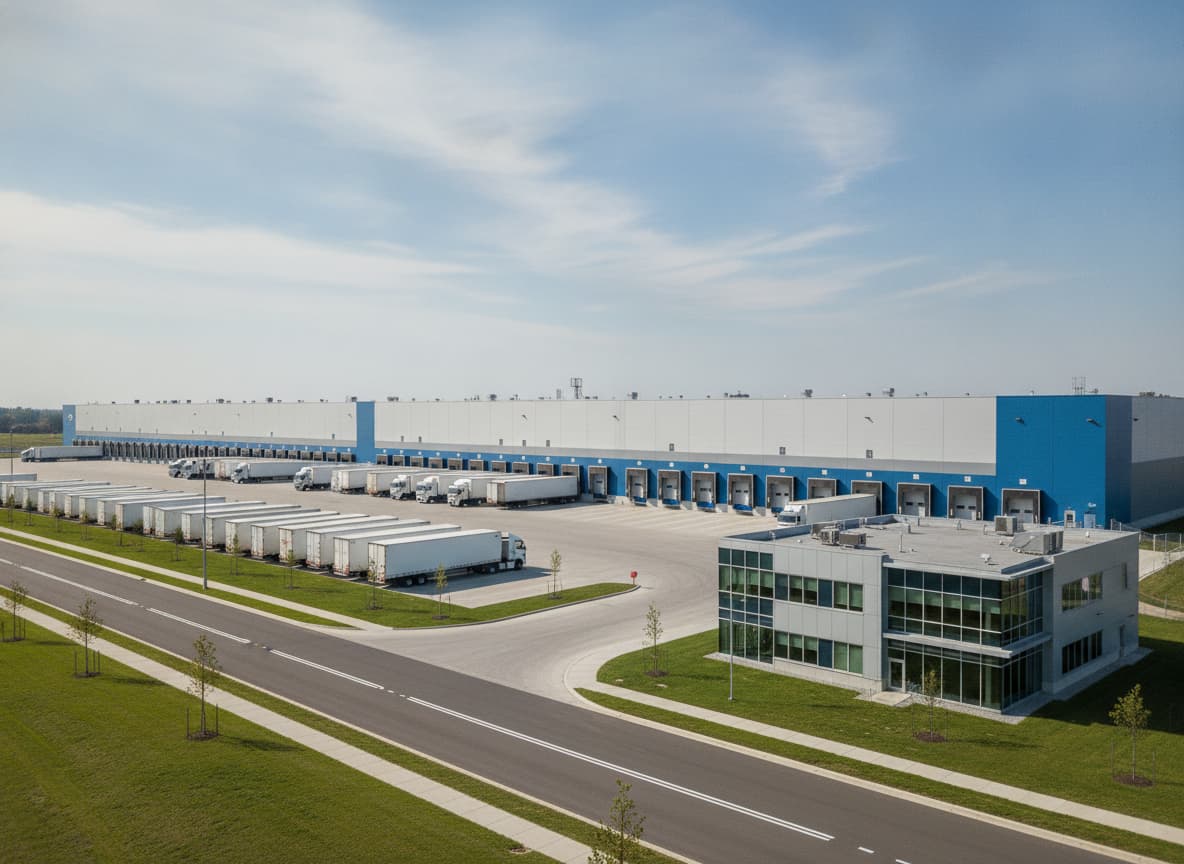
Bulk distribution warehouses, the big-box buildings that 3PLs, freight consolidators, and regional logistics operators run from, get underwritten on a specific set of physical features and a specific lease profile. Clear height (commonly 32 to 40 feet on modern stock), dock-door ratio, trailer-parking depth, column spacing, and sprinkler capacity all flow into the appraisal and the lender's comfort. We frame the deal around what underwriters actually score, not just the asking price.
Depending on whether you own and operate the building yourself or hold it for a third-party tenant, we'll match you to SBA 504, conventional bank, life-company, or DSCR debt. The lease's term and the tenant's credit usually move the rate and the proceeds more than anything else on an investor deal.
- Third-party logistics (3PL) operators buying their facility
- Regional distribution hubs for retail or wholesale
- Freight consolidators and cross-dock operations
- Investors buying a leased bulk-distribution box
Last-Mile & Fulfillment Center Loans
Capital for infill, urban-adjacent distribution close to the customers it serves.
Last-mile and fulfillment properties sit near dense population centers so packages move from dock to doorstep in hours, not days. E-commerce now drives well over a fifth of U.S. retail, and that shift keeps pulling demand toward smaller infill warehouses, repurposed industrial buildings, and urban-edge fulfillment hubs. Lenders know the trend and most want exposure to it, but the deal still has to pencil.
These can be owner-user or investor. Owner-occupants often pair SBA 504 with the building so they're not tying up working capital in real estate. Investors lean on DSCR and bank loans sized to the in-place lease. Functional traits like clear height, dock-door count, van-loading positions, employee parking, and power capacity all influence value, so we shape the loan package around the features that underwriters and appraisers actually weigh.
- Last-mile delivery and courier operators
- Regional e-commerce fulfillment hubs
- Investors targeting infill industrial
- Repositioning older warehouse stock into last-mile use
Cold Storage & Refrigerated Warehouse Loans
Specialized financing for temperature-controlled facilities and food-distribution buildings.
Cold storage is its own asset class. Refrigeration systems, insulation, food-grade build-outs, backup power, and dock seals make these buildings expensive to build and expensive to replace, and that equipment intensity is exactly why lenders underwrite them more conservatively than dry warehouse. Tenant-specific build-outs also narrow the universe of replacement users, so coverage and leverage have to absorb that risk.
Expect lower leverage and higher debt-service coverage on these deals: cold-storage loans commonly run in the 55-70% LTV range with DSCR around 1.30x or higher (current/approximate, verify for your scenario). Life-company and CMBS lenders that understand the cold-chain story can deliver long-term fixed rates in exchange for that more conservative structure. Owner-operators in food distribution may also qualify for SBA 504, which can finance the building plus much of the fixed refrigeration infrastructure.
- Food-distribution and grocery logistics operators
- Refrigerated 3PL and frozen-storage businesses
- Owner-users in cold-chain industries
- Investors in temperature-controlled assets
Flex & Light Industrial Warehouse Loans
Financing for the hybrid spaces that blend office, warehouse, and light-industrial use.
Flex and light industrial buildings, part office and part warehouse, sometimes with showroom or light-assembly space, are the workhorses of small and mid-sized business parks. They tend to finance well because the floorplan is re-leasable to a broad tenant pool and the build-out isn't tied to one specialized use. That re-leasability is what underwriters reward when they size leverage and rate.
The two numbers that move terms most are the office-to-warehouse ratio and the build-out quality. A 20-30% office finish with grade-level or low-dock loading reads as general-purpose to most lenders; a 60%+ office finish or a highly specialized lab fit-out moves the deal into a different category and a smaller lender list. We'll match the deal to bank, credit-union, SBA, or DSCR debt depending on how owner-occupied the building is.
- Owner-users buying a flex condo or single building
- Multi-tenant flex parks held for income
- Light-assembly and contractor-yard businesses
- R&D-light tenants in general-purpose space
SBA 504 Owner-User Warehouse Loans
Buy the distribution building your business operates from with low money down and a long-term fixed rate.
If your company occupies most of the warehouse, the SBA 504 program is usually the most capital-efficient way to own it. A typical 504 is structured 50/40/10: a bank or credit union holds a first mortgage for about 50% of the project, a Certified Development Company (CDC) funds roughly 40% through an SBA-guaranteed debenture, and you contribute around 10% as a down payment. The CDC portion carries a long-term fixed rate (20 or 25 year), which is valuable for a logistics operator that wants predictable occupancy costs for decades.
Proceeds can cover the building, the land, and many fixed improvements, including built-in racking infrastructure, dock equipment, energy upgrades, and certain refrigeration systems. For existing buildings you generally need to occupy at least 51% of the space; ground-up construction has a higher initial-occupancy threshold. We'll also help you weigh SBA 504 against SBA 7(a) and a conventional owner-occupied loan, then shop the bank first-mortgage piece so the overall package is competitive.
- 3PL and logistics operators buying their facility
- E-commerce sellers outgrowing leased space
- Manufacturers with a distribution component
- Owners ready to stop paying rent and build equity
Investor Warehouse Loans: Bank, CMBS & Agency Debt
Financing underwritten on the lease and the property's cash flow, not your personal income.
For investors acquiring or refinancing leased distribution and warehouse space, lenders underwrite primarily to the property. A debt-service-coverage-ratio (DSCR) loan sizes the loan from net operating income against the proposed payment, so the strength of the tenant and the length of the lease often matter as much as your tax returns. A DSCR around 1.25x is a common target for a stabilized, well-leased industrial asset (verify for your scenario).
Loan-to-value on standard industrial and distribution properties typically lands in the 65-75% range, with pricing driven by lease term, tenant credit, location, and whether the building is single- or multi-tenant. A long lease to a creditworthy logistics tenant generally improves both proceeds and rate. Because we're a brokerage, we compare bank, credit-union, life-company, CMBS, and debt-fund options side by side instead of forcing your deal into one product. Commercial financing is available broadly, beyond California.
- Single-tenant net-lease distribution centers
- Multi-tenant flex and warehouse parks
- 1031 exchange replacement properties
- Cash-out refinance on an appreciated industrial asset
Calculators for this loan
What people ask before they apply
What kind of loan is best for a warehouse my own business will occupy?
If your company occupies most of the building, the SBA 504 program is often the strongest fit because it lets you buy with about 10% down and locks a long-term fixed rate on the CDC portion. SBA 7(a) and conventional owner-occupied loans are alternatives worth comparing. The right answer depends on your occupancy percentage, how long you plan to stay, and your cash position, which is exactly what we walk through with you.
How much do I need to put down on a distribution or warehouse loan?
It depends on whether you're an owner-user or an investor. Owner-occupants using SBA 504 typically put down around 10% of the project cost. Investors buying leased distribution space usually see loan-to-value in the 65-75% range, meaning roughly 25-35% down, with cold storage often requiring more equity. Final terms vary by lender, tenant, and property, so verify for your scenario.
What DSCR do lenders want on an investor warehouse loan?
For a stabilized, well-leased industrial property, a debt-service-coverage ratio around 1.25x is a common target, meaning net operating income covers the loan payment about 1.25 times. Cold storage and more specialized assets are often held to 1.30x or higher. A longer lease to a creditworthy tenant can improve both the coverage lenders will accept and your pricing.
Can I finance a cold storage or refrigerated facility?
Yes. Cold storage is financeable but underwritten more conservatively than dry warehouse because of the refrigeration systems, insulation, and food-grade build-out. Expect leverage around 55-70% LTV and DSCR near 1.30x or higher. Life-company, CMBS, bank, and SBA 504 lenders all participate, and we shop the ones that understand the cold-chain story.
Are warehouse loans available outside California?
Our commercial lending, including warehouse and distribution financing, is offered broadly and is not limited to California. Residential lending is focused on Sonoma County, the North Bay, and California, but for commercial property we work with borrowers in many markets. Call Jesse at 707-595-5393 to talk through your location and deal.
What makes a distribution property attractive to lenders right now?
E-commerce has pushed demand for last-mile and bulk-distribution space higher, with online sales now above roughly a fifth of U.S. retail. Functional features matter too: clear height, dock-door count, trailer parking, power capacity, and a creditworthy tenant on a solid lease all strengthen a deal. We help you present those strengths the way underwriters score them.
Can SBA 504 cover racking, dock equipment, or refrigeration?
The 504 program is designed for long-term fixed assets, so the building, land, and many permanent improvements can be included, and certain fixed equipment such as built-in refrigeration or dock infrastructure may qualify. Moveable racking and rolling equipment are often handled differently. We help you sort what belongs in the real estate loan versus separate equipment financing.
Why use a broker instead of going straight to my bank?
A single bank offers one set of products; as a brokerage, North Bay Capital compares many lenders so your deal is matched to the structure that actually fits. For warehouse and distribution properties that can mean weighing SBA 504 against conventional, or DSCR against bank and CMBS options. You get one point of contact, Jesse, and a real human who picks up the phone.
Jesse Gonzalez, President & Founder
NMLS #278103 · CA DRE #01855372 · Last reviewed June 24, 2026
Talk through your warehouse deal with someone who knows the structures
Whether you're buying the building your logistics business runs from or adding a leased distribution center to your portfolio, the right loan structure makes a real difference. Call Jesse Gonzalez at North Bay Capital at 707-595-5393, or email jesse@northbaycap.com, to review your scenario and see which lenders fit. No pressure, just straight answers.