Home › Commercial › Retail Loans
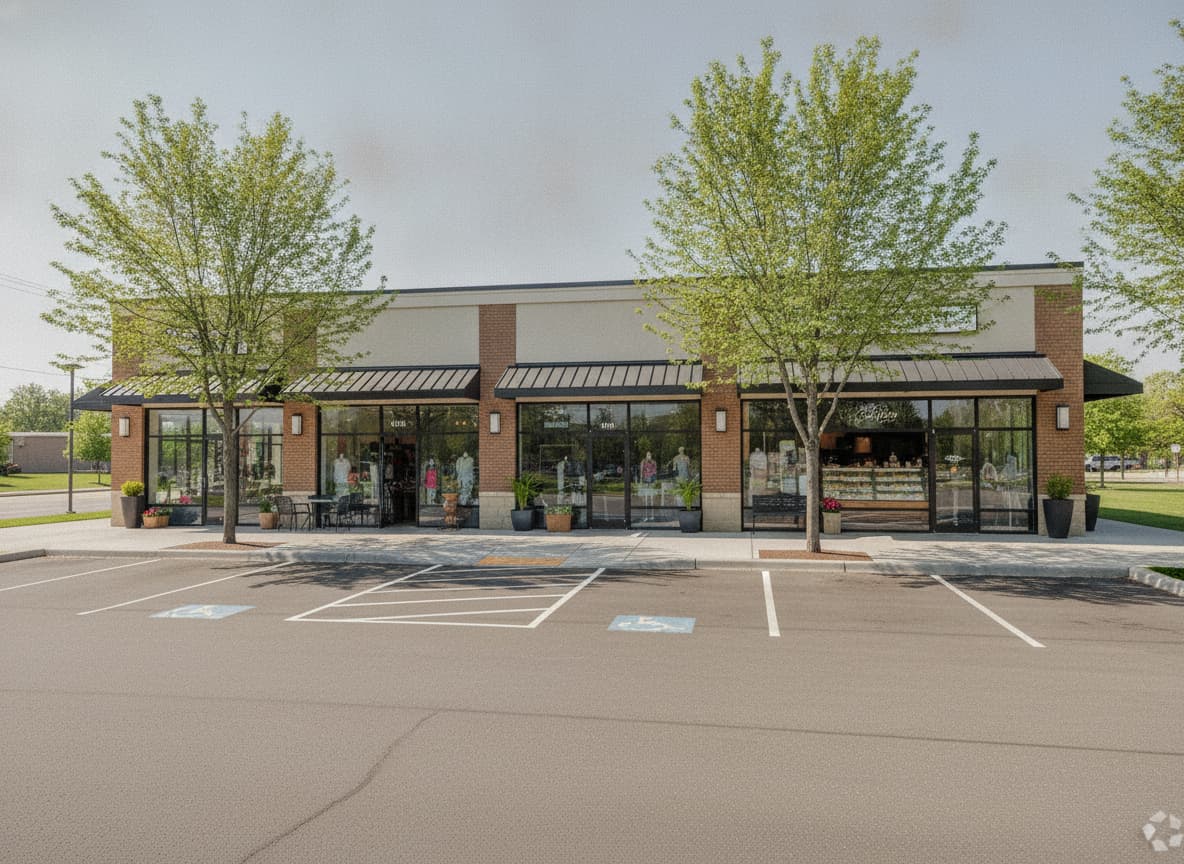 Commercial Real Estate Lending
Financing for the Retail Property You Own or Want to Buy
From single-tenant pads with a national-brand lease to multi-tenant strip centers and mixed-use buildings, we shop the lenders that actually understand retail and structure the loan around your tenants, your leases, and your numbers.
North Bay Capital arranges retail property loans for investors, owner-users, and 1031 buyers across strip centers, single-tenant net lease (STNL), multi-tenant retail, and mixed-use. As a brokerage, we match each deal to the right lender and structure it around tenant credit, lease terms, LTV, and DSCR.
Programs we broker
The options under retail loans — and the right fit for each.
Anchored Retail & Grocery-Anchored Center Loans
Long-term financing for centers built around a steady, traffic-driving anchor.
Grocery-anchored and anchored retail centers are some of the most financeable retail you can own. A grocery store, pharmacy, or big-box anchor pulls reliable foot traffic that keeps the inline tenants paying rent, and lenders price that risk accordingly. Life companies, banks, and agency-style commercial lenders all compete for these deals when the anchor is strong and has meaningful remaining term.
Underwriting hinges on the anchor lease — credit of the tenant, remaining term, sales performance where it's reported, and any co-tenancy clauses that protect the inline rents. Pair a healthy anchor with a clean rent roll and you can generally push leverage and lock in long fixed-rate money. We shop the deal across lenders that actually like anchored retail so the structure matches your hold.
- Acquiring a grocery-anchored center
- Refinancing a maturing balloon
- Long-term hold with fixed-rate certainty
- 1031 exchange into anchored retail
Single-Tenant Net Lease (STNL) Loans
Financing built around one tenant and one lease.
A single-tenant net lease property is one building leased to one occupant — often a national or regional brand on a pad site or freestanding store. With STNL, the lease is the deal. Lenders look hard at the tenant's credit, how many years remain on the term, the rent bumps, and which expenses the tenant covers.
Most STNL loans are written on triple-net (NNN) leases, where the tenant pays property taxes, insurance, and maintenance. That keeps net operating income predictable, which is exactly what a lender wants to see. A long remaining term from a strong-credit tenant in a steady category generally earns tighter pricing and more leverage; a shorter term or weaker tenant pulls leverage down and rate up. We arrange a lot of STNL financing for 1031 buyers, so call early if you're on a clock.
- 1031 exchange buyers on a deadline
- Investors wanting passive, hands-off income
- Buyers of national-brand pad sites
- Refinancing a single-tenant building
Multi-Tenant Strip Center Loans
Unanchored and anchored strips, sized on the full rent roll.
A strip center or multi-tenant retail building spreads risk across several tenants instead of one. That can be a strength — the loss of any single tenant doesn't wipe out the income — but it also means underwriting is more involved. Lenders study the full rent roll, lease expiration schedule, occupancy history, and how essential the tenant mix is to the local trade area.
The loan is sized on debt-service coverage: net operating income after vacancy and expenses has to cover the mortgage payment with room to spare, commonly a 1.25x cushion or better. We take the same rent roll to several lenders and compare real terms side by side rather than forcing your deal into one box.
- Investors buying an income center
- Owners refinancing a maturing loan
- Cash-out to fund the next acquisition
- Stabilized strips with healthy occupancy
Owner-Occupied Retail via SBA (504 & 7(a))
Buy the building your business operates from, with low money down.
If your own business will occupy the retail space, you may not need an investor loan at all. SBA programs are built for owner-users and generally allow far less money down than conventional commercial financing, which keeps cash in the business. The tradeoff is an occupancy requirement: you typically must occupy at least 51% of an existing building, or 60% for new construction.
The SBA 504 program pairs a bank first mortgage with a long-term, fixed-rate portion through a Certified Development Company, with the CDC piece commonly capped around $5M (verify the current limit). The SBA 7(a) program is more flexible and can roll real estate together with working capital or other business needs. We help you compare both paths and the conventional alternative so you choose with the full picture in front of you.
- Retailers buying their storefront
- Service businesses leaving a lease
- Owner-users wanting low down payment
- Construction or major renovation
CMBS Retail Loans
Non-recourse, long-term fixed-rate financing pooled and sold to bond investors.
CMBS (commercial mortgage-backed securities) financing is one of the few non-recourse options for stabilized retail. The lender originates the loan, then bundles it with others and sells it into the bond market, which is why CMBS can offer long-term fixed rates and higher leverage than many local banks — typically up to about 70-75% LTV on solid retail with a 1.25x DSCR or better.
The trade-off is that the loan is securitized, so prepayment is locked in by defeasance or yield maintenance, and the servicing is handled by a third party rather than the bank that closed the deal. That works fine for a long-term hold but can be costly if you sell or refinance early. CMBS makes sense for stabilized anchored centers, well-leased multi-tenant retail, and credit-tenant single-tenant deals where the owner wants non-recourse and a long fixed rate.
- Long-term hold of stabilized retail
- Borrowers wanting non-recourse debt
- Anchored centers and credit STNL
- Refinancing into a long fixed rate
DSCR Loans for Retail Investment
Qualify on the property's cash flow, not your personal income.
DSCR (debt-service-coverage-ratio) loans size the deal on what the retail property earns rather than your tax returns. The lender takes net operating income against the proposed payment and looks for a ratio — commonly 1.20x to 1.25x or better on stabilized retail. If the rent roll covers the payment with cushion, the deal pencils.
DSCR programs are a good fit for investors with multiple properties, complex tax returns, or LLC ownership structures where conventional full-doc underwriting gets cumbersome. Expect leverage in the 65-75% range on stabilized assets, with pricing driven by the strength of the rent roll, tenant credit, and remaining lease term. As a brokerage, we shop DSCR options across multiple lenders so you see real terms side by side.
- Investors with complex tax returns
- Portfolio buyers using LLC vesting
- Stabilized retail held for cash flow
- Cash-out refinance on appreciated assets
Bridge Loans for Retail Repositioning
Short-term capital to buy, fix, lease up, then refinance into long-term debt.
Bridge financing is the right tool when a retail property isn't ready for a permanent loan yet — vacant boxes to fill, a value-add reposition, a tenant rollover to work through, or an off-market acquisition that has to close fast. Bridge lenders underwrite to the future stabilized value and accept the in-place vacancy, which a bank or CMBS lender typically can't.
Terms are shorter (commonly 12 to 36 months) and pricing is higher than permanent debt, but the structure buys you the runway to execute the business plan. Once the center is leased up and the rent roll is stable, we refinance into a longer-term bank, CMBS, or DSCR loan. The exit plan matters as much as the front-end pricing, so we map both before you take the bridge.
- Value-add lease-up of a vacant center
- Fast-close on an off-market acquisition
- Buying a partially vacant strip to reposition
- Bridge to refinance a maturing balloon
Calculators for this loan
What people ask before they apply
What LTV and DSCR can I expect on a retail property loan?
For stabilized retail, most lenders lend up to roughly 65-75% of value and want the net operating income to cover the mortgage payment with a cushion, commonly a 1.25x debt service coverage ratio or better. Stronger deals, such as a single-tenant property with a long lease to a strong-credit tenant, can push leverage toward the high end. Weaker tenant credit or short remaining lease terms generally mean lower leverage and a higher rate. These are ranges, not promises, so call us to size your specific deal.
What is a triple-net (NNN) lease and why do lenders care?
In a triple-net lease, the tenant pays the property taxes, insurance, and maintenance on top of base rent, leaving the landlord with very predictable income. Lenders like that predictability because it makes net operating income easy to model and protects the cash flow that repays the loan. NNN structures are most common on single-tenant retail and often help the deal qualify for better terms.
Can I finance a retail property for a 1031 exchange?
Yes, and many of our retail borrowers are 1031 buyers, especially on single-tenant net lease properties that work well as passive replacement assets. The catch is timing: 1031 deadlines are strict, so you want a lender lined up who can close inside your window. Call North Bay Capital early in your exchange so we can match the deal to a lender who can perform on schedule.
Do I need to occupy the building to get a retail property loan?
No. If you are an investor leasing the space to tenants, you use an investment-property loan sized on the rent roll and DSCR. If your own business will occupy the space, you become an owner-user and may qualify for SBA financing with a much lower down payment, provided you meet the occupancy threshold, usually at least 51% of an existing building. We help you figure out which path fits.
What is the difference between SBA 504 and SBA 7(a) for buying retail real estate?
Both are for owner-users who occupy their space. The 504 program pairs a conventional bank loan with a long-term, fixed-rate second through a Certified Development Company and is well suited to real estate and heavy equipment. The 7(a) program is more flexible and can combine real estate with working capital or other business needs. The right choice depends on your goals, and we will walk you through both alongside the conventional option.
How does an anchored center compare to an unanchored strip for financing?
An anchored center has a major draw, such as a grocery store or pharmacy, that pulls consistent foot traffic and supports the smaller tenants around it. Lenders generally view anchored centers as lower risk and may offer better leverage and pricing. Unanchored strips can still be financed, but the lender will look more closely at the tenant mix, lease terms, and how essential the businesses are to the surrounding area.
Can I refinance or pull cash out of a retail property I already own?
Yes. Investors refinance retail property to lower a rate, replace a maturing balloon, or pull cash out to fund the next purchase, and we arrange all three. The amount you can take out depends on the property's current value, the rent roll, and whether the new payment still clears the lender's DSCR requirement. Send us the rent roll and current loan details and we will tell you what is realistic.
Does North Bay Capital lend on retail property outside California?
For commercial loans like retail property financing, yes, we work broadly across the country. Our residential lending is focused on Sonoma County, the North Bay, and California, but commercial deals are not limited that way. Jesse Gonzalez is also individually licensed in California, Colorado, Florida, and Alabama, so reach out with your property wherever it sits.
Jesse Gonzalez, President & Founder
NMLS #278103 · CA DRE #01855372 · Last reviewed June 24, 2026
Have a retail deal? Let's size it together.
Send over the rent roll or the lease and we'll tell you, in plain English, what leverage and terms are realistic before you write the offer. As a brokerage, North Bay Capital shops your deal to lenders who actually understand retail. Call Jesse Gonzalez at 707-595-5393 or email jesse@northbaycap.com to start.